
12 Jun 2026
Women's Safety and Empowerment: Building a Society of Equality
Join us as a volunteer and help create meaningful change. Your small effort can make a big difference in someone's life.

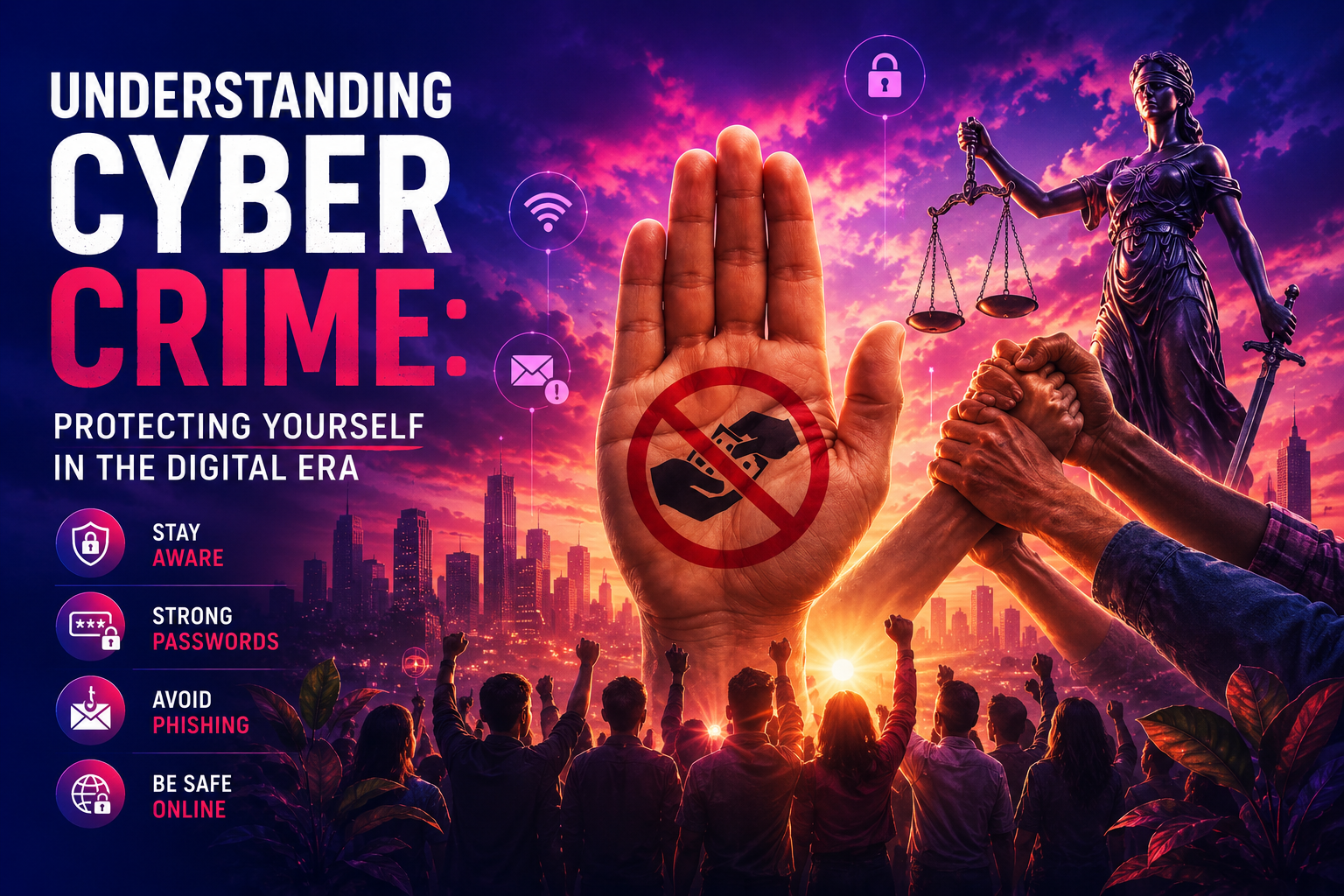
The rapid growth of technology and internet connectivity has transformed the way people communicate, work, shop, and manage their daily lives. While digital advancements have brought countless benefits, they have also created opportunities for cybercriminals to exploit unsuspecting individuals and organizations. Cyber crime has become one of the fastest-growing threats worldwide, affecting people of all ages and backgrounds.
From online banking fraud and identity theft to phishing scams and social media impersonation, cyber threats continue to evolve every day. Understanding these risks and adopting preventive measures is essential for maintaining personal and financial security in the digital age.
Cyber crime refers to any criminal activity that involves the use of computers, digital devices, networks, or the internet. Cybercriminals use technology to steal sensitive information, commit financial fraud, spread malicious software, or gain unauthorized access to personal and business data.
Unlike traditional crimes, cyber crimes can be committed remotely, making them difficult to detect and investigate. This is why awareness and prevention play a crucial role in reducing cyber-related risks.
Phishing is one of the most common forms of cyber crime. Criminals send fake emails, messages, or website links pretending to be legitimate organizations in an attempt to steal passwords, banking information, or personal details.
Cybercriminals often target individuals through fake investment schemes, online shopping scams, fraudulent payment requests, and unauthorized banking transactions.
Identity theft occurs when criminals obtain personal information such as Aadhaar numbers, bank details, passwords, or social media credentials and use them for fraudulent activities.
Fake profiles, impersonation accounts, and online blackmail cases have become increasingly common. Many victims unknowingly share sensitive information that is later misused by criminals.
The misuse of digital platforms to threaten, harass, or intimidate individuals can have serious emotional and psychological consequences, particularly among young people.
Many cyber crimes can be prevented if individuals recognize warning signs early. Some common indicators include:
Being cautious and verifying information before taking action can help prevent many cyber incidents.
Create unique passwords that combine letters, numbers, and special characters. Avoid using easily guessable information such as birthdays or names.
Adding an extra layer of security significantly reduces the risk of unauthorized account access.
Regular updates help fix security vulnerabilities and protect devices from malware and cyber attacks.
Always verify links, emails, and messages before clicking or sharing information. When in doubt, contact the organization directly through official channels.
Avoid sharing sensitive personal details publicly on social media platforms or untrusted websites.
Cyber security is not solely the responsibility of technology companies or law enforcement agencies. Every internet user plays a role in creating a safer digital environment. Educating individuals, families, students, and employees about cyber threats can significantly reduce the number of successful attacks.
Community awareness programs, educational campaigns, and digital literacy initiatives are essential tools in the fight against cyber crime. The more informed people are, the less likely they are to become victims of online fraud and exploitation.
Non-government organizations, educational institutions, and community groups can contribute by conducting cyber awareness workshops, providing educational resources, and promoting responsible online behavior. Such initiatives empower citizens to identify risks, protect themselves, and support others in staying safe online.
As technology continues to advance, cyber threats will remain a significant challenge for individuals and society. However, awareness, vigilance, and responsible digital practices can greatly reduce the risks associated with cyber crime.
By staying informed, protecting personal information, and adopting basic cyber security measures, individuals can safeguard themselves and contribute to building a safer and more secure digital future for everyone.