12 Jun 2026
Women's Safety and Empowerment: Building a Society of Equality and Respect
Join us as a volunteer and help create meaningful change. Your small effort can make a big difference in someone's life.

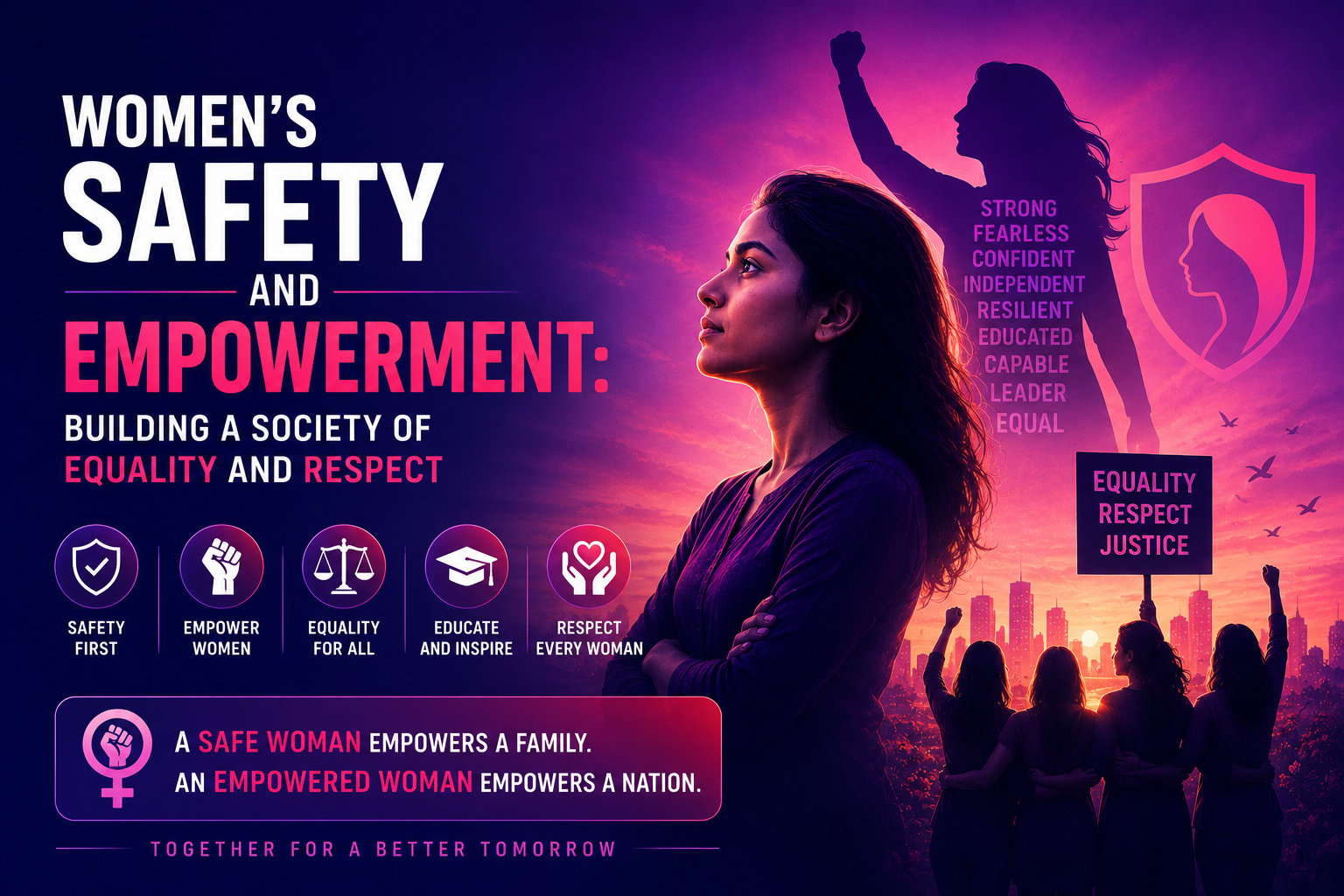
Women play a vital role in shaping families, communities, and nations. Their contributions to education, healthcare, business, governance, and social development are invaluable. However, despite significant progress in many areas, women around the world continue to face challenges such as discrimination, harassment, violence, unequal opportunities, and social barriers that affect their safety and well-being.
Creating a society where women feel safe, respected, and empowered is not only a matter of human rights but also a fundamental requirement for sustainable social and economic development. Women's safety and empowerment are closely connected, as individuals who feel secure and supported are better able to pursue education, careers, leadership opportunities, and personal growth.
Women's safety extends beyond physical security. It includes emotional well-being, social dignity, equal treatment, and freedom from discrimination or harassment in all aspects of life.
Women may face challenges in various environments, including:
Addressing these concerns requires collective efforts from families, communities, organizations, and policymakers.
Empowerment enables women to make informed decisions, participate equally in society, and achieve their personal and professional goals. When women are empowered, they contribute significantly to economic growth, social progress, and community development.
Empowered women are more likely to:
Promoting empowerment helps create more balanced and inclusive communities where everyone has equal opportunities to succeed.
Despite growing awareness, many women continue to encounter obstacles that affect their quality of life and opportunities.
A safe and respectful work environment is essential for professional growth. Organizations must encourage policies that promote equality, dignity, and fair treatment for all employees.
Domestic violence remains a serious social concern that can affect physical, emotional, and mental well-being. Awareness, support systems, and community engagement play important roles in addressing this issue.
As digital platforms become increasingly important, online harassment, cyberbullying, and digital abuse have emerged as major concerns. Educating users about online safety and responsible behavior is essential.
Gender-based discrimination can limit access to opportunities, resources, and decision-making processes. Building inclusive communities helps reduce these barriers and promote equality.
Education is one of the most effective tools for empowering women and girls. It provides knowledge, confidence, and opportunities for personal and professional growth.
Benefits of education include:
Investing in education helps create future generations of strong, informed, and confident women.
Building safer communities requires cooperation from everyone. Families, educational institutions, businesses, community leaders, and organizations all have a role to play.
Key steps include:
A culture of respect and accountability can significantly contribute to women's safety and empowerment.
Non-government organizations, community groups, and social institutions can help promote women's welfare through awareness programs, educational initiatives, support networks, and advocacy efforts.
These initiatives help:
Collective action can create lasting positive change for women and society as a whole.
A society that values women's safety and empowerment benefits everyone. When women have equal access to opportunities and live without fear of discrimination or violence, communities become stronger, healthier, and more prosperous.
The path toward equality requires ongoing awareness, education, support, and commitment from all members of society. By working together, we can create environments where every woman feels safe, respected, and empowered to achieve her full potential.
Women's safety and empowerment are essential for social progress and sustainable development. Through education, awareness, community participation, and collective responsibility, society can create a future where women enjoy equal opportunities, dignity, and security.
Empowering women is not just about improving individual lives—it is about building stronger families, thriving communities, and a more inclusive world for future generations.